From Factory Floor to Data Centre: Moving & Positioning Large Generator Sets
November 23, 2026
0
The rapid expansion of AI, cloud computing and hyperscale data centres is driving unprecedented demand for backup power infrastructure. While attention often focuses on the facilities themselves, there is an equally important challenge behind the scenes: manufacturing, moving and positioning the generator sets that keep these critical operations running when grid power is unavailable.
Modern generator sets are larger, heavier and more complex than ever before. Before a genset reaches its final operating location, it may be lifted, transported, positioned, tested and relocated multiple times throughout its lifecycle. Each stage presents its own challenges, requiring equipment that can handle substantial loads safely, efficiently and with precision.
As demand for backup power continues to grow, generator manufacturers and project teams are under pressure to increase throughput while maintaining safety, quality and delivery schedules. Effective heavy lifting and load-moving strategies are increasingly critical to achieving these objectives.
Why Generator Sets Keep Growing
The power demands of modern data centres continue to increase as operators expand capacity to support AI workloads, cloud services and digital infrastructure.To meet these requirements, generator manufacturers are producing increasingly powerful gensets that integrate multiple components into a single package, including:
- Engines
- Alternators
- Fuel systems
- Cooling equipment
- Exhaust treatment systems
- Acoustic enclosures
- Control and monitoring systems
When assembled, these packages can weigh tens or even hundreds of tonnes, creating significant handling requirements throughout production, testing, transportation and installation. As equipment size increases, moving and positioning generator sets becomes far more complex than simply lifting a load from one location to another.
Handling Across the Lifecycle
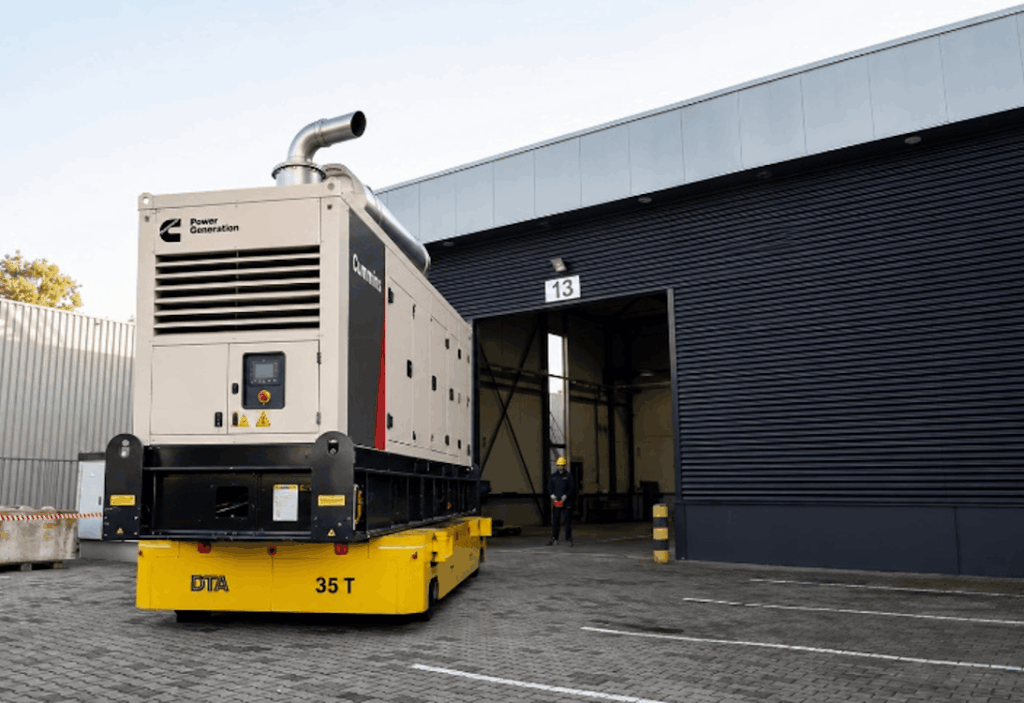
Generator sets typically undergo several handling operations before entering service.
A typical journey may include:
- Component receipt and staging
- Assembly and integration
- Factory acceptance testing (FAT)
- Storage and dispatch preparation
- Loading for transportation
- Site unloading
- Final positioning and installation
At every stage, safe and controlled movement is essential to maintain productivity, minimise risk and avoid delays.For manufacturers, efficient handling supports production output. For contractors and end users, it helps keep installation and commissioning activities on schedule.
Manufacturing Challenges
Managing Increasing Equipment Weights
As generator capacities grow, so do the dimensions and weights of major components for large generator sets. Larger engines, alternators and enclosure systems require handling solutions capable of safely moving increasingly heavy loads while maintaining precise control throughout the process.
Maintaining Production Flow
Generator manufacturing environments are often organised around a sequence of assembly and testing operations. Delays in moving equipment between workstations can create bottlenecks that affect productivity, labour utilization and delivery schedules. Efficient handling systems help maintain smooth production flow while reducing downtime between manufacturing stages.
Working Within Existing Facilities
Many production facilities have evolved over time and were not originally designed for today’s larger and heavier equipment. Manufacturers often need to move completed assemblies around existing machinery, support structures and production equipment while operating within limited floor space.
Supporting Testing Operations
Before shipment, many generator sets undergo extensive testing and inspection procedures. Moving large assemblies into and out of testing facilities requires safe and reliable handling solutions that minimise disruption to production schedules while maintaining strict safety standards.
Preparing for Shipping
Once manufacturing and testing have been completed, generators must be prepared for transportation. This may involve moving completed packages across production sites, positioning them within dispatch areas, or loading them onto transport equipment.
Common challenges include:
- High equipment weights
- Restricted manoeuvring space
- Tight delivery schedules
- Variable ground conditions
- Complex load configurations
Efficient handling solutions help manufacturers manage these operations safely while supporting on-time delivery commitments.
Installation Challenges On-Site
The handling requirements do not end when a generator leaves the factory. Upon arrival at a project site, equipment may need to be unloaded, moved, staged, and positioned before commissioning can begin.
Depending on the facility layout, generators may need to be:
- Moved through restricted access routes
- Positioned adjacent to electrical infrastructure
- Installed in space-constrained environments
- Aligned with prepared foundations
- Coordinated with other ongoing construction activities
In some cases, achieving the required final position may be more challenging than the initial lift itself.
The Importance of Precision Positioning
Successful generator installation depends on accurate alignment with a range of supporting systems and infrastructure.
Final positioning often requires alignment with:
- Foundation systems
- Vibration isolation mounts
- Fuel connections
- Exhaust systems
- Electrical interfaces
- Maintenance access zones
Even small positioning errors can create delays, increase installation costs, and introduce complications during commissioning.
As a result, controlled movement and precise positioning are just as important as raw lifting capacity.
Heavy Lifting and Load-Moving Solutions
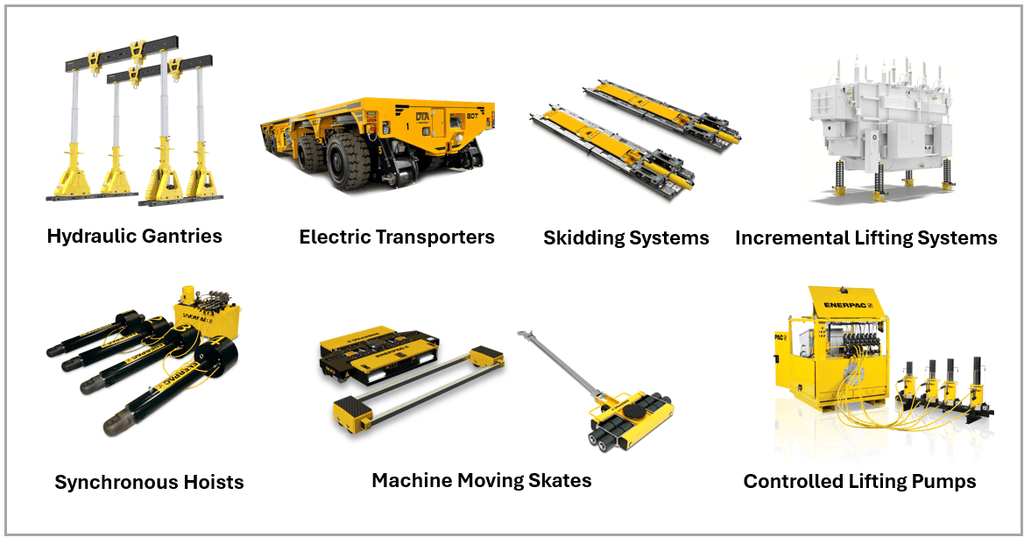
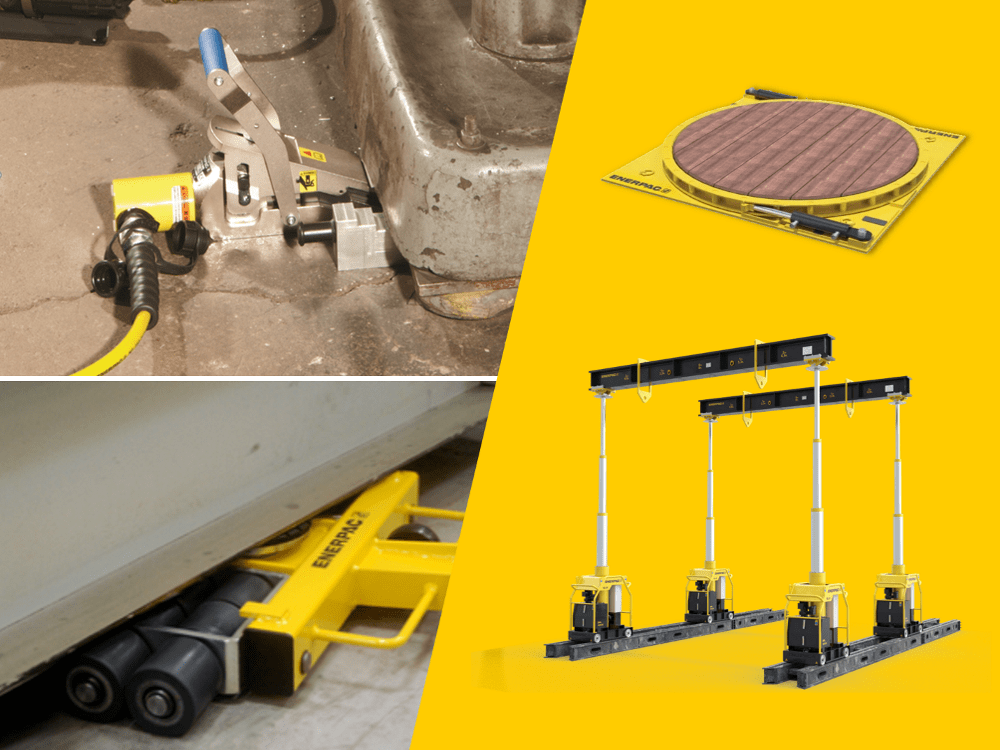
Different stages of the generator lifecycle require different lifting and movement strategies. Matching the right technology to the task can improve safety, efficiency, and operational control. Solutions may range from AGVs supporting repeatable movements within manufacturing facilities to portable hydraulic gantries, self-propelled transporters, incremental lifting systems, and synchronous hoists that assist with complex handling and positioning operations during installation.
Portable Hydraulic Gantries
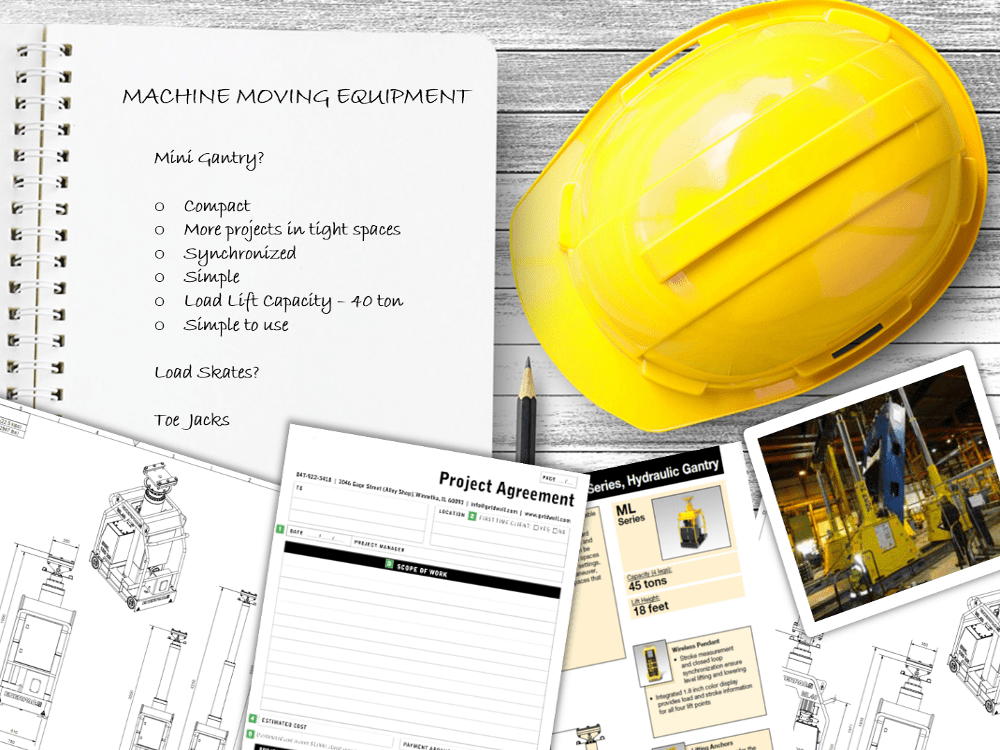
Portable hydraulic gantries provide a flexible lifting solution for large generator assemblies where overhead crane access is limited, unavailable or impractical.
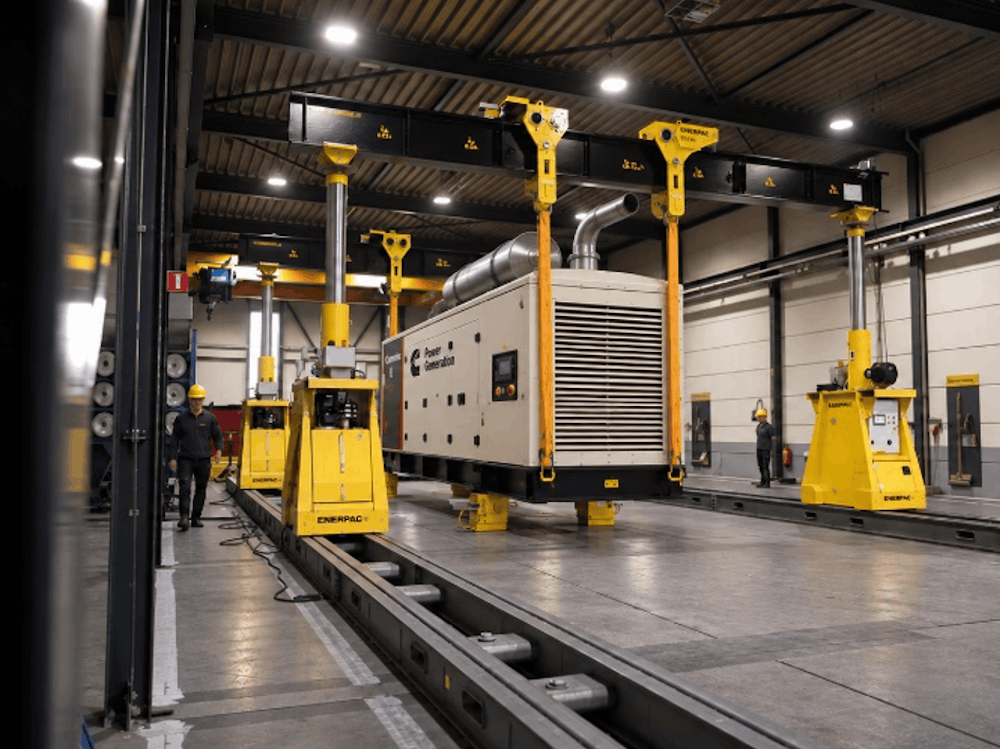
Above: Enerpac SBL-Series Hydraulic Gantry lifting a generator
Their modular design allows lifting operations to be adapted to different manufacturing environments, testing facilities, and installation locations. They can also be integrated with additional load-moving systems to support complete lifting and transfer operations.
Battery & Manual Machine Skates
Machine skates offer an effective solution for moving heavy generator components and completed assemblies over short to medium distances.
Manual machine skates provide a simple and versatile option for controlled movement of smaller items, while battery-powered systems can improve efficiency and reduce physical effort when handling larger loads or conducting frequent movements.
These solutions are particularly useful where flexibility is required across multiple production areas.
Automated Guided Vehicles (AGVs)
Generator manufacturing frequently involves repetitive movement between assembly stations, testing bays, inspection areas, and dispatch locations. Automated Guided Vehicles (AGVs) can help automate these routine transport tasks by following predefined routes and workflows. This enables manufacturers to create more predictable material-handling processes, improve production flow and reduce bottlenecks.
As production volumes increase, AGVs can play an important role in supporting scalable manufacturing operations.
Self-Propelled Electric Transporters
Where generator assemblies need to be moved over longer distances, self-propelled electric transporters such as eMovers provide a highly manoeuvrable and efficient solution. These systems allow operators to transport large and heavy loads with precise control while reducing dependence on cranes and other handling equipment. Electric operation also makes them well suited to indoor production environments where noise and emissions are important considerations.
Incremental Lifting Systems
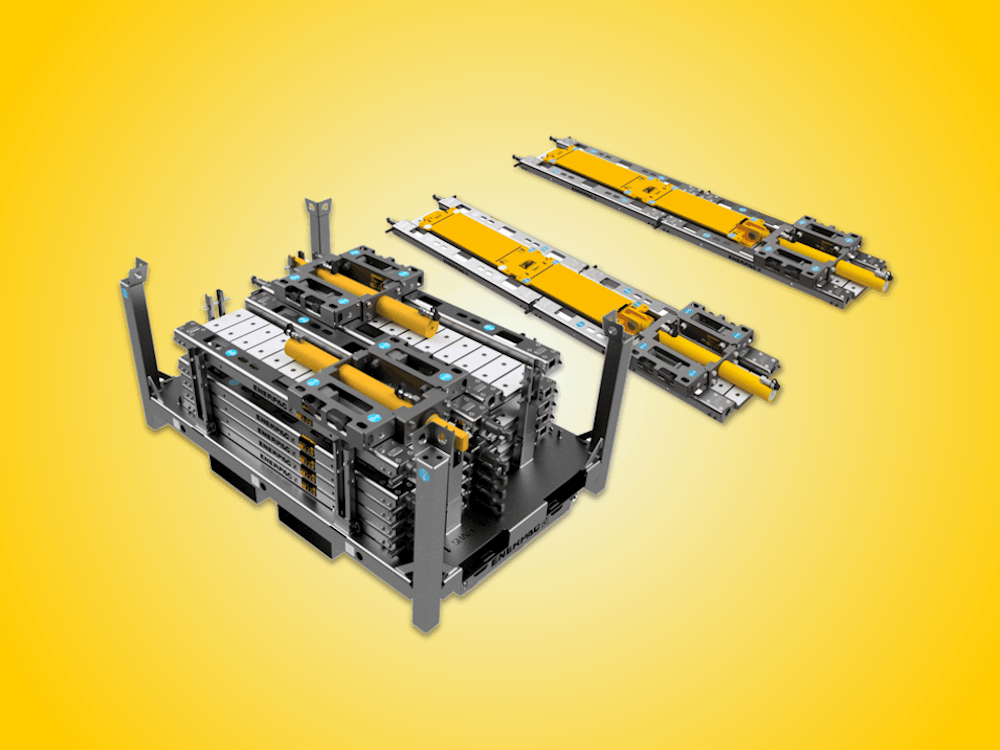
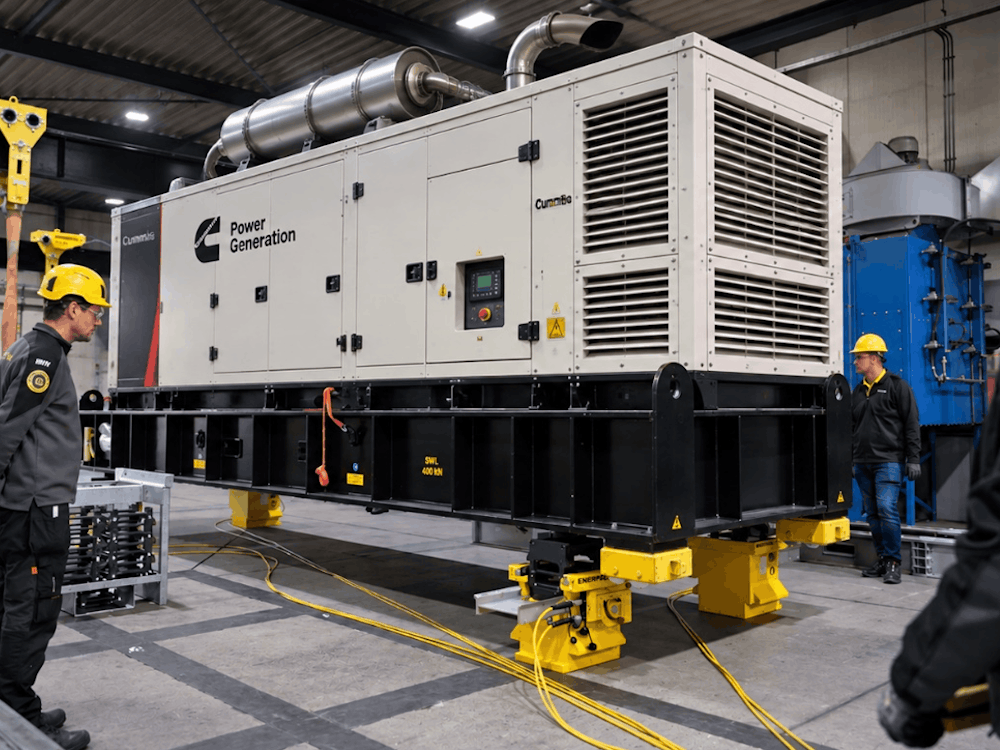
In situations where generators must be lifted in stages, or where space constraints limit conventional lifting approaches, incremental lifting systems such as the Enerpac Cube Jack offer an alternative solution (as shown in the main picture at the top of this page).
By progressively raising loads while maintaining stability and control, these systems can support complex lifting operations in both manufacturing and installation environments.
Controlled Lifting Pumps and Hydraulic Systems
Many generator handling applications require precise coordination between multiple lifting points.
Controlled lifting pumps and hydraulic systems allow operators to synchronise lifting operations, manage load distribution and make accurate positioning adjustments throughout a lift. This level of control can help improve safety while reducing the risk of equipment damage and rework.
Synchronous Hoists
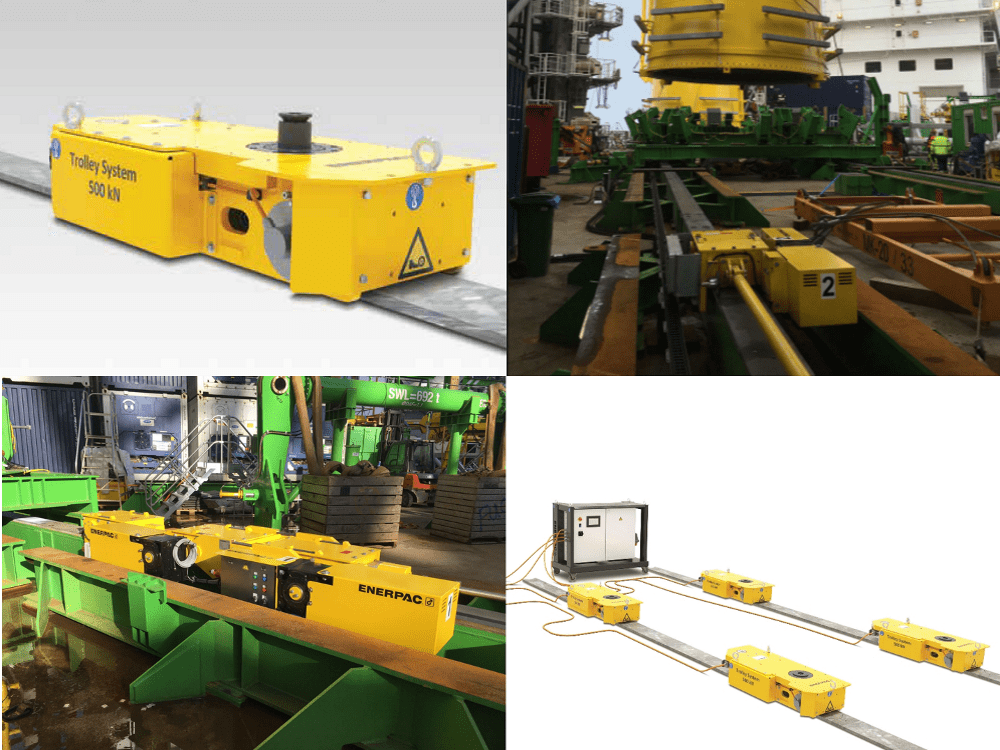
Where a crane is available on-site, synchronous hoists can be deployed below the hook to enhance load control during lifting and precise positioning operations.
By providing precise, synchronised movement across multiple lifting points, these systems help maintain load balance throughout the lift and enable fine adjustments during placement. This can be particularly valuable when installing large generator packages onto prepared foundations, elevated structures or within space-constrained areas of a data centre project. For contractors, synchronous hoists offer a way to combine the reach and lifting capacity of a crane with the precise control required for final positioning, helping reduce installation risks and improve placement accuracy.
Planning For The Full Lifecycle
The most successful handling strategies consider the complete generator lifecycle rather than treating each movement as an isolated activity.
By evaluating handling requirements from assembly through to final installation, organisations can:
- Improve safety performance
- Reduce production bottlenecks
- Increase operational efficiency
- Improve positioning accuracy
- Reduce project risk
- Support delivery schedules
- Make better use of available space
As generator sizes continue to increase, taking a lifecycle approach to heavy handling can deliver significant operational benefits.
How Enerpac Can Help
Enerpac has a team of experts that can help support generator manufacturers and project teams on-site. The full portfolio available of portable hydraulic gantries, machine skates, AGVs, Self-Propelled Electric Transporters, Cube Jack Systems and controlled hydraulic lifting technologies, such as Synchronous Lifting Hoists, can support heavy generator handling throughout the equipment lifecycle.
Whether the objective is improving production efficiency, preparing equipment for shipment, or achieving accurate final positioning when an overhead crane isn’t viable, selecting the right handling solution can help improve safety, productivity and operational performance.
Key Takeaways
- Growing demand for data centre backup power is driving the production of larger and heavier generator sets.
- Generator handling extends well beyond installation and includes manufacturing, testing, transportation and final positioning.
- Efficient handling solutions can improve production flow, reduce bottlenecks and support delivery schedules.
- AGVs can help automate repeatable load movements within manufacturing environments.
- Portable hydraulic gantries, machine skates, self-propelled electric transporters, Cube Jack systems and controlled hydraulic lifting technologies all have a role to play in safely handling large generator assemblies.
- Precision positioning is often just as important as lifting capacity alone.
Planning Your Next Generator Move?
Whether you’re moving generator components through production, supporting factory acceptance testing, preparing equipment for transportation or positioning completed gensets on-site, selecting the right lifting and load-moving solution can improve both safety and efficiency.
Enerpac’s heavy lifting specialists can help identify the most effective approach for handling large generator assemblies throughout their lifecycle.